
Speaking about the role of technology in healthcare, MileBot founder Chen Gong says, “Technology has been promoting the progress of human society, and the purpose of medical treatment is to cure diseases and save people, improve people’s quality of life, and let patients regain their dignity.”
Chen Gong works on exoskeleton robots that support rehabilitation training for people with disabilities. After graduating from the National University of Singapore in 2016, he founded MileBot in Shenzhen through the city’s Peacock talent program. In 2018, he was selected for the healthcare category of Forbes China’s 30 Under 30 list. Within two years of starting the company, MileBot secured Pre-A funding, even before its products were formally on the market. What attracted investors and customers?
Technology in the present and the future

Maybe you don’t know what an exoskeleton robot is, but you do know Iron Man. Baidu Encyclopedia defines exoskeleton robotics as a comprehensive technology that integrates sensing, control, information, fusion and mobile computing, providing a wearable mechanical mechanism for the operator. Simply put, it’s “wearable robots”. Imagine the disabled and the elderly wearing this “wearable robot” and being able to stand and walk independently and eventually recover. That’s Chen Gong’s job now.
The human imagination of robots has never ceased. The film Terminator 2: Judgment Day became a classic for many fans. In the play, robots from the future trigger human thinking about technological progress and human nature, and creative liquid robots give people more imagination about the shape of robots.
These ideas sparked Chen Gong’s early interest in robots. His love for robots made him choose to enter Shanghai Jiao Tong University to study mechanical engineering and automation, and then enter the Department of Biomedical Engineering of National University of Singapore for further study. His research directions include: Rehabilitation Exoskeleton Robot control, human–robot interaction control, brain-controlled exoskeleton robot system, etc.
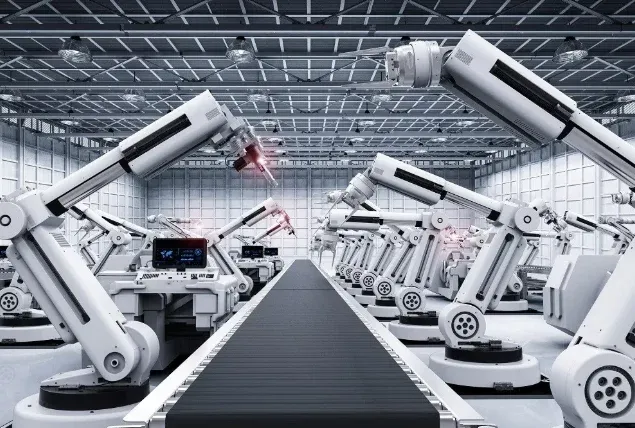
His interest in robotics led him toward medical applications. Compared with the industrial automation that has developed for decades, the medical automation that just started obviously gives Chen Gong more room for development. “Robots have basically replaced manpower in industry, but in the medical field, it still depends mainly on people.” Chen Gong believes that in the future, the medical industry will surely revolutionize industrial upgrading through robots.
Madame Curie said, “I want to turn life into a scientific dream, and then dream into reality.” Chen Gong also made great efforts to turn his dream into reality. After completing his studies, he chose to start his own business – to establish MileBot. He always believed that good scientific research can not only stay in the laboratory or thesis, but also benefit more people by turning research into products. Chen Gong said, “This is the attitude that a really good technology should have.”
Of course, the choice of entrepreneurship is not only for ideals, but also based on Chen Gong’s accurate judgment of future trends. After 20 years of academic research, the research of rehabilitation robots in the field of basic medical knowledge, life medicine, robotics technology has been relatively perfect, and it is suitable for entering the stage of industrialization.
Moreover, China has a good environment for entrepreneurship, and supports and encourages technological entrepreneurship. Especially Shenzhen, which is known as the “Silicon Valley” of China, has a complete peripheral industrial chain in the field of robotics, including electronics, machinery, processing, etc. The most important thing is that a large number of high-tech personnel gather here.
In 2016, Chen Gong founded the MileBot in Shenzhen.
Support from an exoskeleton
As China’s population ages, conditions affecting older adults have become a growing concern. These include stroke, such as cerebral hemorrhage and cerebral infarction. According to statistics, there are more than 10 million stroke patients in China. By 2030, there will be 31.77 million stroke patients in China. In addition, there are about 5 million people with disabilities who need rehabilitation training every year.

For these disabled and elderly patients, the traditional rehabilitation methods are mechanical rehabilitation, such as riding a balance bike, hand training or acupuncture, physical therapy, electrotherapy and so on. These methods need to rely on manual stretching. This also means that the physiotherapist is physically exhausted, especially in walking rehabilitation. He needs to carry the entire patient up, or squat on the ground and move the patient’s feet to complete the rehabilitation.
The drawbacks of traditional rehabilitation methods are obvious, which is closely related to the limitations of human resources, namely physiotherapists. Moreover, this is not only a problem caused by people’s physical strength and ability, but also the regional imbalance of medical resources and the shortage of physiotherapists. According to the number of stroke patients in our country, more than 400,000 rehabilitation physiotherapists are needed, but there are only about 20,000 professional practitioners in our country, the gap is very large.
During his PhD, Chen Gong focused on one-legged exoskeleton robots, knee and ankle techniques. At the same time, unilateral skeletal robots will face problems of weight and balance, which naturally makes Chen Gong begin to pay attention to bilateral skeletons. Although there are many scenarios for exoskeleton applications, the huge market prospects of Lower Limb Rehabilitation Exoskeleton robots make him choose this as the entry point.
Compared with traditional rehabilitation methods, MileBot’s robots help patients recover early by completing rehabilitation exercises with high physical strength and repetitive consumption by robots. The sensor carried by the robot can record the patient’s recovery situation every time, and guide the patient quantitatively according to the algorithm, thus avoiding the error of physiotherapist’s judgment based on experience.
The reaction of the capital market soon proved that Chen Gong’s choice was correct. In April 2018, MileBot announced that it had completed the Pre-A round of financing led by Share Capital and Lenovo Venture Capital and follow-up investment of tens of millions of yuan.
Traditional Business Model + Technological Innovation
In the field of health care, rehabilitation is only a small direction. Compared with the flourishing of rehabilitation robots abroad, China lags far behind the rest of the world in the field of rehabilitation, which is due to both technical reasons and the weakness of rehabilitation awareness of domestic patients themselves.
ReWalk Robotics, Israel, was regarded as a benchmarking company for rehabilitation robots abroad. In 2014, its personal exoskeleton received FDA clearance in the United States, and the company completed its stock market listing. It was once praised by the media as “the next Tesla”. However, his market performance was not as good as expected because of the high price. For Chen Gong, the first challenge is how to survive.
Around the world, rehabilitation robotics companies have explored different business models. For example, EKSO products in the United States are mainly aimed at ordinary consumers, but the high price ordinary people can not afford through commercial insurance, so the people he applies to are mainly wounded soldiers. HAL in Japan has achieved some success in leasing, providing services for patients through its own rehabilitation clinic, but this business model also determines that its scale will not be very large.
Chen Gong believes that business models used overseas are not necessarily suitable for MileBot. Chen Gong believes that there are many reasons, first of all, different national conditions. Overseas, there is a perfect hierarchical diagnosis and treatment system for rehabilitation. Community medical care is developed. There are special community rehabilitation hospitals, including private outpatient rehabilitation model, which is also very mature. But there are no small community rehabilitation centers in China. Secondly, the concept of rehabilitation in China is not strong. For example, the elderly can not recover at home, they can only choose to go to large hospitals, but because of the high cost of rehabilitation machinery, the hospital rehabilitation equipment is not much. This also determines that MileBot cannot replicate foreign successful models.
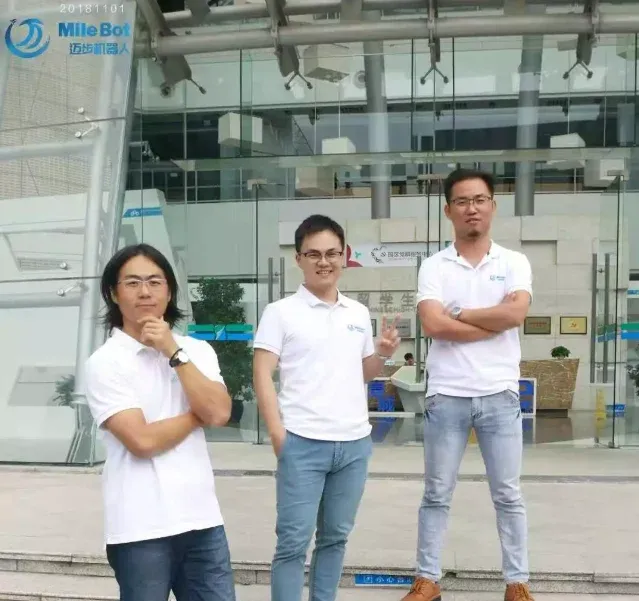
After considering MileBot’s strengths and limitations, Chen Gong found that “traditional business model + technological innovation” is a feasible path. MileBot’s main strength is technological innovation. MileBot’s core technology is human–robot interaction. As the first enterprise in the world to adopt compliant actuator technology, MileBot’s rehabilitation robot can provide precise and stable human–robot interaction control, greatly improving safety and comfort. Second, its research and production costs give it a price advantage over products developed overseas. Third is the team’s experience. Rehabilitation robot is an interdisciplinary field involving robotics and medicine. It has natural technical barriers and high access threshold. Dr. Ye and Chen Gong, two founders of the MileBot team, are top experts in rehabilitation robotics. Another co-founder has experience in robotics sales, marketing and operations management.
“When we innovate in technology, the simplest and most traditional business model, the medical device route, is the most suitable way to go.” Of course, there are still many challenges waiting for Chen Gong on this road.
Rehabilitation robots also need capital-driven and standardized markets to enter the market. This involves policy, management, hospitals and many other aspects, as well as many issues worthy of in-depth consideration. Chen Gong is also working hard to promote the incorporation of rehabilitation robots into medical insurance so that more patients can enjoy better rehabilitation treatment.
How to balance customer demand and technical barriers is another difficult problem Chen Gong has to face. For example, doctors and physiotherapists know about rehabilitation, but they don’t know about robots. In Chen Gong’s eyes, they often put forward a lot of fantastic demands. They think that robots should be as intelligent as human beings, be able to control joints, step size, and detect every muscle data. Although these requirements seem impossible to achieve, for Chen Gong, only through continuous communication, understanding the needs of patients, medical knowledge, continuous product iteration can be recognized by the market.
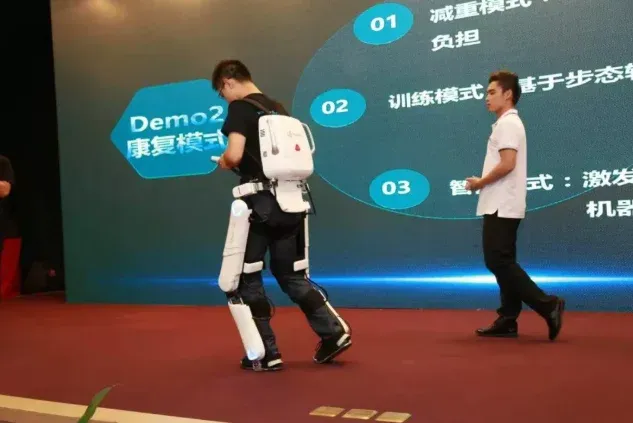
In November 2017, the third generation exoskeleton robot BEAR-H1 was launched, breaking through the difficulties of mechanical power, electronic sensing, human–robot interaction, material technology and artificial intelligence. It creatively adopted compliant actuators, increased the number of freely moving joints and optimized multi-sensor fusion technology, which made the exoskeleton more flexible, easier to walk with and more effective in rehabilitation.
Learning beyond technical expertise
Within two years of founding the company, the team had developed products approaching market launch and secured tens of millions of yuan in Pre-A funding. The size of the company has grown from three founders to more than 50 employees. The company’s growth has continually challenged Chen Gong to expand his knowledge. In the past, it may only need to face technical problems, but now there are not only technical aspects, but also many challenges in capability, operation and management. For Chen Gong, in order to adapt to the future, he must learn quickly to constantly improve his ability.

On the recommendation of MileBot investor Share Capital, Chen Gong chose to upgrade himself in the Central European Intelligent Medical Entrepreneurship Course. In addition to the knowledge of the course itself, Chen Gong benefited most from the students who worked intensively in the medical field. They are a group of excellent entrepreneurs with a deep medical background and professional technology. They have rich experience and broad vision. The discussions in each class made a strong impression on him. For example, after Professor Cai Jiangnan explained the problem of medical insurance in China, students will also express their views from their own experience. These valuable lessons can help other intelligent medical entrepreneurs to avoid many detours.
Despite the recognition he has received, 30-year-old Chen Gong remains measured about his progress. He knows that it’s far from his peak. “I just tried something new and made some achievements, but it’s far from what I want to do meaningfully.” Just as he understands failure, don’t be afraid to fail, try boldly, but you need to face failure squarely, know the cause of failure, accept the cost of failure, and be prepared to prevent failure.

At the age of 30, Chen Gong is just beginning. With regard to the future, Chen Gong is constantly trying to achieve his goals. He describes MileBot as a technological, R&D and product-oriented enterprise. In the short term, the first step is to push the existing products to the market, develop new products quickly according to the market demand, and open up the product line. In the foreseeable future, we hope to build the whole intelligent rehabilitation system, upgrade the rehabilitation industry through robotics, internet, artificial intelligence and other technologies, and complete the transformation from manual to robotic.
Asked what he was most proud of at the age of 30, Chen Gong said, “Earning a doctorate, starting a business, and finding someone who loves and supports me.”